Things we control
Knowledge
What only lives in your head
A business owner whose business runs, grows, and - if they choose - sells without them.
Most business owners are not optional. They know it because they’ve felt it. The holiday where they never quite felt like they could switch off. The decision that sat waiting for them to return. The process that only works because they are in it.
There is a different way to build a business. It starts with understanding what is holding you there.
TAKE THE FREE AUDITIt does not mean handing the business to a team and hoping things hold together. It means the business has systems, knowledge, and processes that do not depend on the owner being the answer to every question.
You stay involved where you choose to. You step back from what you do not want to carry. The business stops depending on you being there and starts depending on the systems you built. That is a different business. And a more valuable one.
A chain is anything that ties your business value to you personally rather than to the business itself. The framework names all twelve — so you know exactly what to look for, and what to remove.
Most owners discover their chains when it is too late to remove them cleanly — during a sale process, a health scare, or a period when the business simply could not run without them. The framework finds them early, and calculates what they are costing you.
Things we control
What only lives in your head
Things we control
The pull of “the way we always do it”
Things we control
Clients and staff who need you specifically
Things we control
Moving too slowly — or expecting results too fast
External influences
No protected space to do the strategic work
External influences
A business that can only run from one place
External influences
Transformation work stays perpetually deprioritised
External influences
Ownership of change sits with no one specific
Mental images we create
Fear of something going wrong expands out of proportion
Mental images we create
The unknown expands to fill whatever space you give it
Mental images we create
Decisions made on what you think others think
Mental images we create
Competing demands distort every decision
Critical information that lives only in your head. When the business depends on what you personally know, it cannot function without you.
The hours your business personally requires from you to function. The more hours it needs, the less freedom you have.
Client and supplier relationships that follow you personally rather than the business. They walk out the door when you do.
How clients and staff see your role. If they believe nothing happens without you, they act accordingly — and so do buyers.
When the business cannot set or follow its own priorities without you in the room, progress stalls the moment you step back.
Key responsibilities that sit with you and have no named backup. Each one is a point of failure tied to your presence.
How quickly your business can respond to opportunities or urgent needs without your direct involvement. A bottleneck at the top slows everything.
The pull of familiar routines. When the team always comes to you for approval, the business cannot evolve independently.
Revenue tied to you being physically present — at your premises, client sites, or industry events. It does not transfer cleanly to new ownership.
When legal, financial, or reputational problems fall to you personally rather than to business systems, the business is exposed in your absence.
The anxiety your team or clients feel about your absence. If their commitment depends on you personally, a change of ownership becomes a retention risk.
When all significant stakeholder pressure lands on you personally, the business borrows resilience from your capacity — which does not transfer with a sale.
Most business advice tells you to "systemise" without telling you what to systemise. The 12 Chains framework identifies every specific way a business can be dependent on its owner.
Instead of generic strategies, you start with an audit that shows your exact situation and calculates what it's costing you. Your roadmap is built around your specific chains, not a one-size-fits-all playbook.
The framework works in focused 90-minute sessions — one chain at a time. You make real, measurable progress without clearing your calendar or pausing the business to do it.
The founder who is the only salesperson
Documents their sales process, trains a team member to run discovery calls, and removes themselves from every deal within 4 months.
The founder whose clients only want to speak to them
Builds a client communication system, introduces a dedicated account manager, and transitions key relationships from person to brand over 6 months.
The founder who approves every decision
Maps their decision criteria, creates a delegation framework for the team, and removes themselves from day-to-day sign-off within 60 days.
It arrives as twelve small ones. Each invisible until it costs you something — a deal, a holiday, a valuation. Knowledge that lives only in your head. Relationships that follow you, not the brand. Decisions that wait for you even when you are not available.
Most owners discover their chains when it is too late to remove them cleanly — during a sale process, a health scare, or a period when the business simply could not run without them and it showed. This problem is well documented — Michael Gerber’s The E-Myth Revisited describes exactly why founders become trapped in the work of their business rather than working on it. And Harvard Business Review’s research on the Founder’s Dilemma shows the structural reasons why so many businesses remain owner-dependent.
The audit finds them early - and calculates what they're costing you.
Not a score out of ten. Not a quiz with a personality result. A clear picture of which chains are most active in your business right now, what they're costing you, and where to start.
Which chains are active
The dependencies running in your business right now - identified and named.
The binding constraint
The one chain that, if removed, would unlock the most freedom for you.
Where to start
A specific starting point - not a list of everything at once.
What It's Costing You
An estimate of what your owner dependency costs annually and what it's reducing your exit valuation by
The Optional Founder
A free resource for business owners working through these ideas. Follow along as Philip documents the build.
The Optional Founder Sprint
A 10-week sprint building the automated and AI systems that enable you to get out of the day-to-day grind and increase your business valuation.
“I had no idea how dependent my business was on me until I took the diagnostic. Within 90 days of following the roadmap I was able to take my first proper holiday in 6 years.”
Sarah M.
E-commerce Founder
“The 12 Chains framework gave me a clear picture of exactly where to focus. It is the most practical business independence tool I have used.”
James T.
Agency Owner
“I scored high on 9 of the 12 chains. That was a wake-up call. Philip's framework helped me systematically remove each dependency over 6 months.”
Rachel K.
Service Business Owner
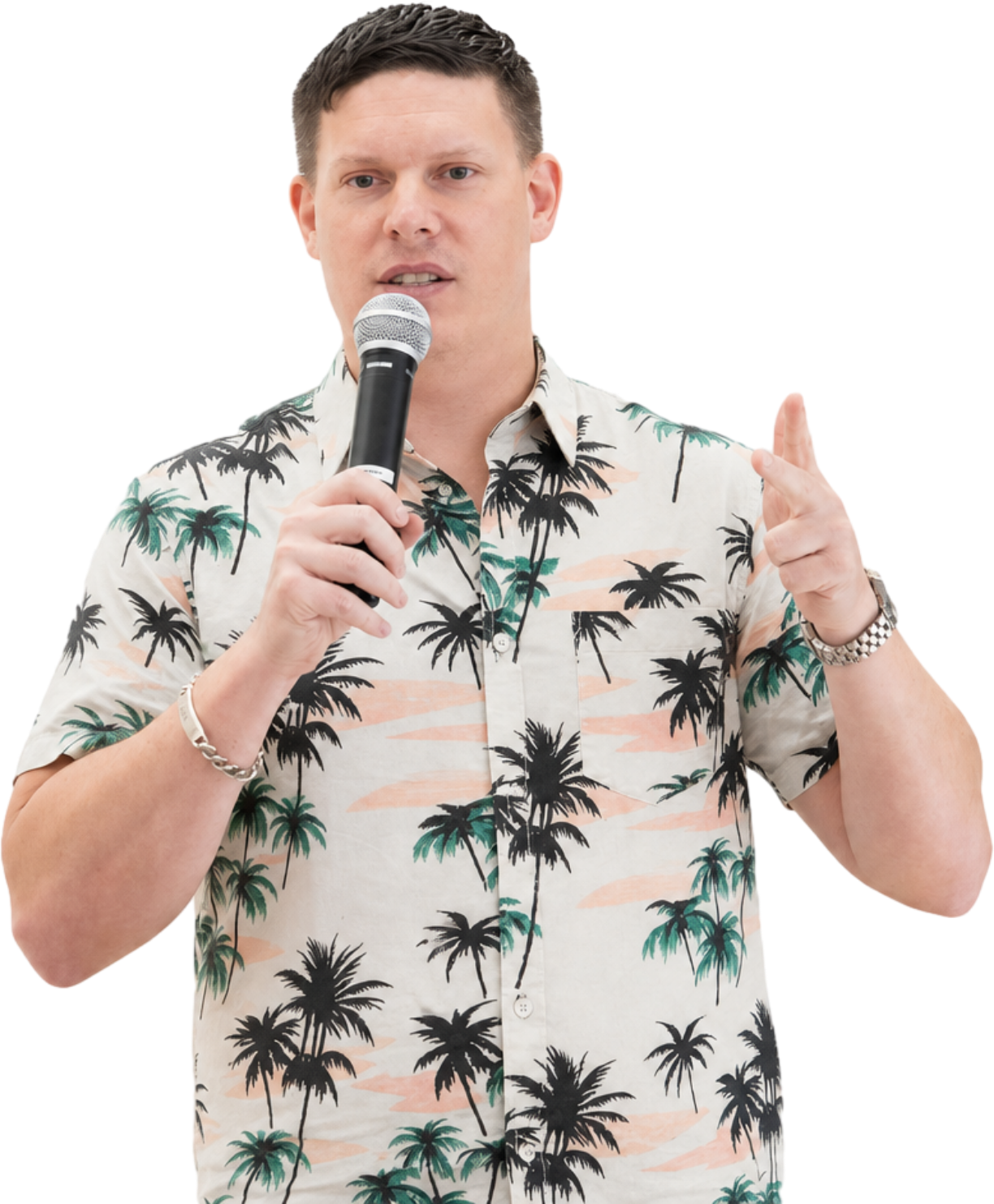
Philip is a Dubai-based AI strategist and the creator of the 12 Chains framework, published in his book Finally Find Freedom. He has spent the last several years building AI systems that remove owner dependencies — for himself and for clients — and uses them daily. The Optional Founder Accelerator is his implementation programme for business owners who want the same result.
The Audit is the right place to start. It takes ten minutes. It costs nothing.
TAKE THE FREE AUDIT